
Introduction
Search Engine Optimization (SEO) remains one of the most effective digital marketing strategies for businesses looking to increase online visibility and attract potential customers. In 2026, SEO has become more advanced than ever, with search engines focusing on user experience, content quality, and website performance. Businesses that invest in SEO can achieve long-term growth, generate organic traffic, and build credibility in their industry.
Whether you run a local business, an e-commerce store, a startup, or a service-based company, understanding modern SEO practices is essential for success.
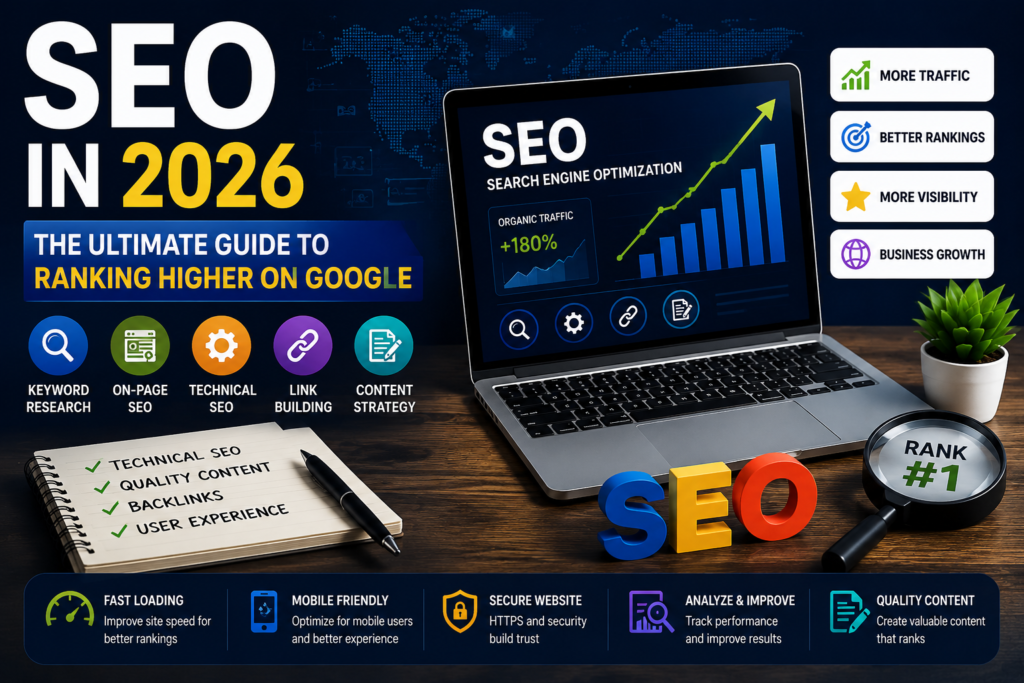
What is SEO?
SEO, or Search Engine Optimization, is the process of improving a website’s visibility in search engine results pages (SERPs). The goal is to rank higher for relevant keywords so that potential customers can easily find your website.
SEO involves optimizing website content, improving technical performance, building authority, and enhancing user experience.
Why SEO is Important
1. Increases Organic Traffic
When your website ranks on the first page of Google, more users can discover your business without paying for advertisements. Organic traffic is often highly targeted and valuable.
2. Builds Trust and Credibility
Users generally trust websites that appear at the top of search results. Higher rankings signal authority and reliability.
3. Provides Long-Term Results
Unlike paid advertising, SEO continues to generate traffic even after optimization efforts are completed. It offers sustainable growth over time.
4. Improves User Experience
Modern SEO focuses on website speed, mobile responsiveness, and easy navigation, creating a better experience for visitors.
Key SEO Components
Keyword Research
Keyword research is the foundation of every successful SEO strategy. Businesses should identify keywords that their target audience searches for.
Examples include:
- Digital Marketing Services
- SEO Agency Near Me
- Best SEO Tips 2026
- Local SEO Services
Using the right keywords naturally within content improves search visibility.
On-Page SEO
On-page SEO refers to optimizing individual pages on a website.
Important factors include:
- SEO-friendly titles
- Meta descriptions
- Header tags (H1, H2, H3)
- Internal linking
- Image optimization
- Keyword placement
Quality content remains the most important ranking factor.
Technical SEO
Technical SEO ensures that search engines can crawl and index a website efficiently.
Key technical factors include:
- Fast loading speed
- Mobile-friendly design
- Secure HTTPS connection
- XML sitemap
- Structured data markup
- Clean website architecture
A technically optimized website performs better in search results.
Content Marketing
Content plays a critical role in SEO success. Businesses should publish valuable blogs, guides, videos, and case studies that solve customer problems.
Effective content:
- Answers user questions
- Provides actionable solutions
- Includes relevant keywords
- Encourages engagement
Regularly updated content helps maintain rankings.
The Rise of AI and SEO
Artificial Intelligence is transforming search engine optimization. Search engines now use advanced algorithms to understand user intent and content quality.
AI-powered SEO tools help businesses:
- Analyze keywords
- Generate content ideas
- Optimize pages
- Track rankings
- Improve user experience
However, human creativity and expertise remain essential for creating trustworthy content.
Local SEO for Small Businesses
Local SEO helps businesses attract nearby customers.
Best practices include:
- Optimizing Google Business Profile
- Collecting customer reviews
- Using local keywords
- Building local citations
- Maintaining accurate contact information
Local SEO is especially beneficial for clinics, educational institutes, restaurants, and service providers.
Common SEO Mistakes to Avoid
Many websites struggle because of avoidable mistakes such as:
- Keyword stuffing
- Duplicate content
- Slow website speed
- Poor mobile experience
- Low-quality backlinks
- Ignoring technical SEO
Avoiding these issues can significantly improve search performance.
Future of SEO
The future of SEO will focus on user experience, AI-driven search, voice search optimization, and high-quality content. Businesses that prioritize helpful, relevant, and trustworthy information will continue to achieve strong rankings.
Conclusion
SEO is one of the most powerful tools for online business growth. By focusing on keyword research, quality content, technical optimization, and user experience, businesses can improve their search rankings and attract more customers. As search engines evolve, staying updated with the latest SEO trends will be essential for maintaining a competitive advantage in 2026 and beyond.