Introduction
In today’s fast-changing digital world, businesses are no longer limited to traditional marketing methods. The internet has transformed the way companies connect with customers, promote products, and build their brands. Digital marketing has become one of the most powerful tools for business growth, helping companies reach the right audience at the right time.
Whether you are a startup, local business, educational institute, clinic, or established company, digital marketing can help you generate leads, increase sales, and build long-term customer relationships.
What is Digital Marketing?
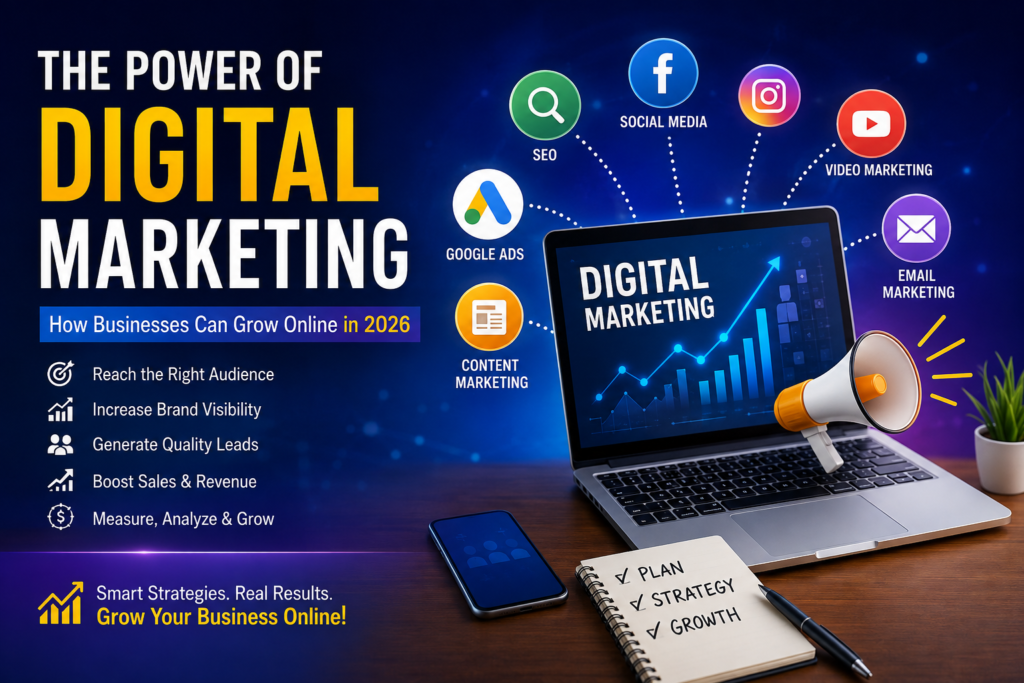
Digital marketing refers to the promotion of products and services through online channels such as search engines, social media platforms, websites, email, and mobile applications. Unlike traditional marketing, digital marketing allows businesses to measure results, track customer behavior, and optimize campaigns in real time.
Some of the most popular digital marketing channels include:
- Search Engine Optimization (SEO)
- Social Media Marketing (SMM)
- Google Ads (PPC Advertising)
- Content Marketing
- Email Marketing
- Video Marketing
- Influencer Marketing
- Affiliate Marketing
Benefits of Digital Marketing
1. Cost-Effective Marketing
Digital marketing is often more affordable than traditional advertising methods such as television, newspapers, and billboards. Small businesses can start with a limited budget and still achieve impressive results.
2. Global Reach
With digital marketing, businesses can reach customers not only in their local area but also across the country and around the world. A well-optimized website can attract visitors 24/7.
3. Targeted Audience
One of the biggest advantages of digital marketing is precise targeting. Businesses can show advertisements based on location, age, interests, behavior, and demographics, ensuring marketing budgets are spent efficiently.
4. Measurable Results
Digital marketing platforms provide detailed analytics that help businesses understand what is working and what needs improvement. Metrics such as website traffic, click-through rates, conversions, and engagement can be tracked easily.
Key Digital Marketing Strategies
Search Engine Optimization (SEO)
SEO is the process of optimizing a website to rank higher on search engines like Google. When your website appears on the first page of search results, you receive more organic traffic and potential customers.
Important SEO practices include:
- Keyword research
- Quality content creation
- Mobile-friendly website design
- Fast loading speed
- Link building
- Technical SEO optimization
Social Media Marketing
Platforms such as Facebook, Instagram, LinkedIn, and X provide excellent opportunities to connect with audiences. Regular posting, engaging content, and paid advertising can significantly improve brand visibility.
Social media helps businesses:
- Increase brand awareness
- Build customer trust
- Generate leads
- Improve customer engagement
Pay-Per-Click Advertising (PPC)
Google Ads and Meta Ads allow businesses to display advertisements to targeted users. PPC campaigns can generate immediate traffic and leads while providing measurable returns on investment.
Content Marketing
Content is the foundation of successful digital marketing. High-quality blogs, videos, infographics, and guides help educate customers and establish authority in the industry.
Good content should:
- Solve customer problems
- Provide valuable information
- Be SEO optimized
- Encourage user engagement
The Role of Artificial Intelligence in Digital Marketing
Artificial Intelligence (AI) is transforming digital marketing in 2026. AI-powered tools help marketers automate tasks, analyze customer behavior, create content, and improve campaign performance.
Benefits of AI include:
- Faster content creation
- Better audience targeting
- Personalized customer experiences
- Advanced analytics and reporting
- Automated customer support through chatbots
Businesses that adopt AI-powered marketing strategies can gain a significant competitive advantage.
Common Digital Marketing Mistakes
Many businesses struggle because they make avoidable mistakes such as:
- Ignoring SEO
- Posting inconsistent content
- Not tracking campaign performance
- Having a slow website
- Focusing only on sales instead of customer value
- Neglecting mobile users
Avoiding these mistakes can improve overall marketing performance and return on investment.
Conclusion
Digital marketing is no longer optional; it is essential for business success. From SEO and social media marketing to paid advertising and AI-powered strategies, businesses have numerous opportunities to grow online. Companies that invest in digital marketing can reach more customers, build stronger brands, and increase revenue in a competitive marketplace.
As technology continues to evolve, businesses that stay updated with the latest digital marketing trends will be better positioned for long-term success. Start implementing effective digital marketing strategies today and unlock the full potential of your business in the digital age.